Блог сайта
This guide consolidates the confirmed Google main updates of December 2025 and March 2026, the simultaneous cycle of spam updates, and the multi-week rollout mechanics that presently shape search volatility. It is geared toward skilled SEO professionals with inner groups who perceive rating signals and have to validate whether or not their existing workflow remains to be efficient. After studying, you'll know the way to decide whether visitors declines are as a end result of algorithmic modifications or seasonal demand, distinguish core replace quality points from spam penalties, and resolve which technical and content material fixes to implement during an active deployment or after stabilization.
How Google rolls out updates over weeks and why the old react handbook fails
Chicago SEO Network is a leading search engine optimization company built to assist local businesses grow their online visibility and convert valuable leads. Located in Chicago, Illinois—with physical offices based at 1030 N. State Street in the Near North Side neighborhood—the agency specializes in implementing advanced search strategies for highly competitive industries. They provide a robust suite of digital marketing seo - https://www.chordie.com, marketing services, including traditional local SEO, Google Business Profile management, technical website optimization, and strategic backlink acquisition. Notably, the firm stands out by integrating advanced technology into its framework, deploying programmatic SEO, automated content generation, and scalable automation to build and rank top-ranking web pages at scale.
Google now distributes core updates and spam updates over intervals of a quantity of weeks, with totally different indexes and verticals receiving staggered updates. Termination does not mean that Google has reverted the adjustments; it simply indicates that the complete knowledge set has been processed. Websites that hope every thing is evident usually compound their losses, because subsequent waves of indexing can deepen the devaluation before the launch is full.
Appearing throughout volatility carries dangers. Diagnosing causality is harder when fluctuations are noisy and mid-implementation fixes could be mistakenly attributed to noise. Nevertheless, standing still absorbs the total influence of a penalty. The trade-off is between overcorrecting for short-term fluctuations and permitting a downgrade to be fixed over a number of waves. Groups that audit and remediate technical debt throughout lively releases typically see partial recovery in subsequent waves. Groups that wait till stabilization often face a better restoration threshold as a result of rivals improve during the identical window.
Core Updates and Spam Updates: How They Overlap, Interact, and Punish the Similar Website Differently
The December 2025 update improved useful content identification and targeted manipulative link building at scale. The March 2026 main replace raised high quality thresholds for low-value content material and adjusted authority weighting. The major updates reevaluate high quality indicators all through the location. Spam updates implement specific policy violations. Because these techniques function simultaneously, they produce overlapping symptoms that complicate attribution.
Diagnostic SignalCore Update PatternSpam Update PatternTraffic trajectoryGradual decline over days or weeksSharp drop concentrated in a short windowAffected scopeDomain-wide or broad category-levelPage clusters, sections, or specific content typesSearch Console behaviorSteady impression decline across diverse queriesPosition collapse for specific terms or page groupsRecovery pathwayRequires holistic quality improvement; no quick fixRequires specific violation removal; can be faster if isolatedSegmentation in Search Console is critical to differentiate these patterns. A website with skinny AI-generated product descriptions and manipulative links to guest posts can activate each techniques simultaneously. Spam cleanup alone hardly ever restores full visibility as a end result of the main replace has already reclassified the site's total usefulness rating. When both come to the identical structure, first clear up the spam drawback to cease the bleeding after which intervene within the core quality to rebuild the authority.
The AI Content Material Threshold: Specific Alerts That Separate Actual Value from Light Content
Survival is decided by relationships between entities accessible by trackers. The author's verifiable experience have to be linked to the subject via external citations or skilled profiles. Content Material that paraphrases top-ranking outcomes without including own data or experiential knowledge is assessed as weak during spam evaluation. Constant factual accuracy is necessary; contradictions inside a web site or in opposition to authoritative sources trigger a devaluation.
Programmatic SEO can produce short-term metric spikes, but erodes long-term belief when the end result lacks depth of response. The stability is between scale and corroboration. Programmatic content survives solely when each page addresses an actual, particular question with accurate info that stands alone without forcing the person to return to the SERP.
AI content demonstrates real value when it facilitates a steady learning path via contextually relevant internal links. Content Material that forces users back to Google, or that participates in hidden placement campaigns where mentions lack genuine thematic relevance, depreciates no matter manufacturing pace. The algorithm inspects whether or not inside hyperlinks serve a logical learning journey or are manufactured to distribute fairness.
Resetting the Playing Subject: How Totally Different Website Sorts, Verticals, and Aggressive Units Are Affected
E-commerce and product content material
E-commerce websites experience a practical restart between late December and early January. The update punishes rewritten descriptions from producers and rewards ideas, critiques and comparison knowledge of the original merchandise. Catalog-heavy sites that prioritized SKU speed over info depth now face a structural drawback. Post-holiday benchmarks have modified. January's visitors ranges aren't a temporary drop but somewhat a brand new aggressive ground that requires funding in unique content to regain participation.
Local search and entity consistency
Local search volatility tends to stabilize shortly after the preliminary shock, but the reset leaves less room for parity. Corporations with inconsistent entity data or weak subject authority of their geographic niche see a everlasting distance from the remaining, while these with sturdy E-E-A-T alerts consolidate their position. Native updates are resolved faster, however the margin of error is lowered as a outcome of surviving opponents are extra tightly grouped.
JavaScript rendering and AI crawlers
Approximately 28% of Googlebot visitors now comes from AI crawlers that won't totally represent JavaScript-dependent content material. Websites built on client-side frameworks run the chance of presenting incomplete or sparse content to a good portion of crawlers, degrading high quality scores regardless of the actual person experience. This creates a friction level the place UX enhancements, like quicker interactive pages, don't remedy the indexing gap. Brands that rely on JavaScript face an indexing value that UX enhancements alone won't fix.

When Traffic Disappears: Disambiguating Algorithmic Loss, Seasonal Demand, and Unconfirmed Volatility
Distinguish seasonality from algorithmic loss
Attribution requires evaluating year-over-year trends somewhat than month-over-month snapshots. Inspect Search Console coverage reports for indexing adjustments. Map the seasonal demand curve of your vertical with the autumn dates. Early January fluctuations regularly happen without a confirmed replace, mimicking an algorithmic disruption when they're really demand-driven.
Why restoration doesn't at all times mean returning to old baselines
A reset units new competitive thresholds, not short-term sanctions. If competitors improved their experience signals during the launch, recovery requires surpassing the next standard, not merely returning to a earlier state. The misconception is to treat each loss as a penalty somewhat than a reclassification to superior options. Some site visitors never returns to the old baseline as a result of that baseline was an artifact of weaker competitors.
What to Prioritize During an Active Deployment: A Scenario-Based Tactical Information
Steep drops on particular web page sorts
If you see a pointy drop in particular page sorts, prioritize spam cleanup. Audit to detect patterns of manipulative hyperlinks, mentions in hidden areas that lack actual relevance, and sparse content material sections. Consolidate overlapping pages. Guarantee internal hyperlinks guide natural studying journeys with out compelled, unrelated anchor texts.
Broad and gradual decreases
If you see a big and gradual decline, intervene in core quality. Increase editorial standards with unique research or proprietary information. Verify that the author's expertise is externally corroborated. Fix bottlenecks in JavaScript delivery so crawlers can entry full content. Don't rewrite in a general way. Identify the weakest third of content material by engagement and impressions, then improve or de-leverage it. This focused approach avoids diluting effort on content material that already works properly.
Flat but volatile traffic
If your visitors is stable however risky, concentrate on technical hygiene and statement. Lock down inner hyperlink architecture, verify indexing of critical conversion pages, and postpone major structural adjustments until volatility stabilizes. Performing on noise during simultaneous updates can create complicated signals that obscure the actual cause. The trade-off is between appearing responsive and truly understanding what you're responding to.
Upskilling as Infrastructure: Why Organizational Learning Now Outpaces Content Velocity
Google rewards organizational learning as a sign, not simply publication cadence. Groups should interpret Search Console patterns, accurately attribute site visitors adjustments, and recognize when acronyms like GEO, AEO, LLMO, or AI-SEO characterize repackaged methods rather than new disciplines. The cycle of acronyms masks identical underlying ways, making a manufactured urgency that obscures strategic clarity. To cut via the noise, you possibly can and validate in case your roadmap matches the real alerts.
AI research and writing instruments can enhance speed, but utilizing them with out rising standards of accuracy and originality accelerates the lack of belief. The sustainable trade-off is implementing sooner tools to implement stricter editorial benchmarks, not sustaining manufacturing quotas. Aggressive advantage belongs to teams that combine quicker instruments with stricter standards, as a end result of velocity alone without precision fails beneath algorithmic inspection.
web optimization Confirmation: Benchmarks to Check If Your Solutions Really Work
Preventive high quality checks predict survival in future updates. Can the content material fully answer a selected question without having to return to the SERP? Can the author's expertise be verified through exterior citations or professional profiles? Are internal hyperlinks a part of a logical learning path? Is income impression measured independently of platform inflation metrics similar to uncooked traffic or aggregated rank count?
Real enchancment shows secure impressions across numerous query variants, rising common positions for non-branded informational content, and stability in conversion fee. The recovery is not confirmed by volatile spikes for a single trophy keyword or by temporary will increase in impressions on irrelevant terms. Broad and stable enchancment across all query types is the observable situation that separates actual restoration from metric noise.
Verdict: Is your current search engine optimization technique still legitimate and what must you change first?
Your technique remains valid if it is based on authentic, user-centered content, with verifiable expertise, technically accessible structure and steady organizational learning. In that case, prioritize auditing JavaScript-dependent content material for crawler accessibility and adjusting inner hyperlink relevance. These are observable corrections with measurable indexing and participation results.
Your technique is outdated if it relies on content material velocity without precision, programmatic scale without authentic worth, or manufactured placement campaigns. In these circumstances, cease production and carry out a section-specific spam audit before making an attempt core high quality enhancements. Responding to central alerts when the actual drawback is spam, or vice versa, wastes the limited window throughout implementation. Teams under stress can reap the advantages of to take care of momentum in the course of the audit.
E-commerce websites should accept that post-holiday baselines have structurally modified. Brands that depend on JavaScript face an indexing price that UX enhancements alone won't fix. Throughout simultaneous core and spam updates, diagnose which system is dominant earlier than allocating assets, because responding to an incorrect sign wastes the restricted window throughout deployment.
Conclusion
The December 2025 and March 2026 updates do not introduce a new search engine optimization paradigm. They enforce existing alerts with stricter thresholds and tiered implementations that punish delayed responses. Stop chasing acronym cycles. Anchor your metrics to revenue quite than platform inflation, and treat upskilling as an investment in technical infrastructure. Run fixes during active deployments, verify impression against numerous query benchmarks, and construct organizational studying. The only sustainable ranking benefit is a group that adapts sooner than the algorithm adjustments.
Summary
This guide examined Google's December 2025 and March 2026 updates, focusing on the mechanics of the multi-week rollout, the excellence between core and spam penalties, and the industry-specific impacts on e-commerce, local search, and websites that depend on JavaScript. Key takeaways include diagnosing traffic loss by way of Search Console segmentation instead of guesswork, prioritizing spam cleanup over core high quality work when both patterns overlap, and confirming restoration via broad question variant stability as an alternative of risky trophy keyword spikes. Subsequent, audit your weakest content material for originality and substantiated expertise, check crawler accessibility for pages that rely on JavaScript, and deal with upskilling your staff as a technical investment quite than an optionally available training expense.
Associated guides
Incessantly asked questions
How do I know if a serious update or an unwanted replace brought on my visitors loss?
Main updates usually trigger a gradual decline in domain-wide impressions throughout multiple queries. Spam updates trigger heavy crashes concentrated on teams of pages or particular phrases. Use Search Console segmentation to match trajectory and reach. If each patterns appear simultaneously, resolve the spam violations first after which handle the primary high quality.
Ought To I pause content material production during an lively launch?
If your technique relies on programmatic or skinny content with no unique worth, cease production immediately and audit existing sections. If your technique is legitimate, continue posting however prioritize technical hygiene and remark over major structural modifications until volatility stabilizes.
What is essentially the most reliable signal that my search engine optimization fixes are working?
Actual restoration exhibits stable impressions across multiple query variants, growing average positions for non-branded informational content, and steady conversion rates. Risky spikes of a single trophy keyword or temporary increases of irrelevant phrases do not affirm restoration.
Why is my JavaScript-heavy web site shedding rankings regardless of fast page speeds?
About 28% of Googlebot traffic now comes from AI crawlers that may not absolutely represent JavaScript-dependent content material. Quick interactive pages enhance the user expertise but do not remedy the indexing gap. You must ensure that crawlers can entry the full content material using server-side rendering or dynamic rendering options.
An Item Sorting system can be of great benefit, and it isn't too difficult to work through on a small scale. It is when this is done for every item in the game that the real difficulty lies. The idea is that the items are put into one chest and then filtered down to chests that already have one of those items inside of them. It involves a lot of hoppers and Redstone, but worth it for saving time for the serious Minecraft player. Voltrox talks through this build over on YouTu
Remember in the beginning of the 32-bit days when controllers simply weren't designed for 3D cameras? You'd have games that mapped up and down viewing to the triggers, and the only way to rotate the camera was to turn your character in the right direction and manually recenter things with a button press. There were a lot of experiments, some better than others, but none held a candle to the introduction of twin-stick controllers. VR FPS is in the same state right now, and while there's a lot of interest in getting to the twin-stick equivalent of whatever the solution ends up being, it's not there yet. Minecraft deals with the motion sickness problem by breaking the immersion during rotation, but as long-term solutions go it feels like sticking the up/down view on the shoulder buttons. It may be graceless and awkward, but at least it gets the job done. Creating a workable free-roaming FPS viewpoint in VR is still an ongoing task, though, so until a better solution is found this will do
If competitive gaming ever really make it as a widely accepted form of entertainment, it will be in large part thanks to the contributions of this strange RPG, action, RTS hybrid known as the MOBA. It's origins date back to the previous generation, but its influence and prime really began in earnest during this one, https://WWW.Mcversehub.com/ as this charming genre mutt quickly found its way into the hearts and hard drives of some of the best gamers out there. Impossibly deep and begging for hours and hours of practice to become even marginally competent on a professional scale at, the MOBA is perhaps the most significant thing to happen to competitive gaming since the FPS.
Building a mine is a given in Minecraft . It's important to dig deep to find items like Diamonds , Redstone, and underground structures. Minecarts are something used as a quick way to get up and down those mines. However, they are easily lost, meaning a new cart may be needed for each jour
It is not necessary, but it is a fun little way to use the various workstations in the game and a great starting point for gamers looking to get into Redstone. enbentz games on YouTube have a simple, but effective, tutorial for creating a Block Swapper in Minecra
We’re all familiar with the standard demo format: you play a section of a game (almost always the tutorial up until just before the first boss), and then everything comes to an abrupt halt while a screen either asks you to unlock the full game to continue, or tells you when it’s coming out. If you’re very lucky (as in the case of most Devil May Cry demos) you’ll get to play through a level and fight a boss out of context. This might convince you to get the full game, or tide you over until a game you’ve been waiting for has been released, but either way, it’s almost always stuff you’ll have to redo once the game proper begins.
This gorgeous cherry blossom-adorned Japanese-style mansion created by echo0delta is a great example of just how cozy and lovely a mountain mansion can be. It's a nice mixture of modern and traditional build styles, paired with some creative ways to light up the scene with lanterns and glowst
Despite all of that, under the proper circumstances, this is still a genre that's very easy to pick up and play, which is perhaps the most important part as it ensures that years and years of gamers to come will find themselves drawn to this intriguing blend of strategy, skill, and luck, just as centuries of people have found themselves drawn to a game of chess.
This may be a cheat, but I didn't want to single out one MOBA like League of Legends, and fuel the ongoing debate of which of these series are better, when really the only intention here is to focus on how great this entire genre is. As such, this entry goes to all you fine MOBAs out there.
Sometimes, though, developers go the extra mile and build a vertical slice to demonstrate their game. This is a lot of work – even re-using assets from the game, you’re looking at many hours of scripting and scenario design – but the payoff speaks for itself. Bravely Default’s demo is essentially its own mini-RPG, with three dungeons to conquer, five bosses to fight, and a whole bunch of enjoyable grinding to do in the interim. It has condensed versions of the streetpass and job mechanics from the main game that allow you to familiarize yourself and get to the fun quickly. The demo may take all of its assets from the main game, but it uses them to craft an experience entirely distinct from it. In doing so, it gets straight to the essence of what makes the full game fun. What’s more, if you master the demo, you get rewards to help you out in the early game, as well as a head start on streetpasses.
That concept is both the curse and crux of the Monaco multiplayer experience. Asking you and three friends to pick a crew of various expertise, Monaco demands a level of teamwork and communication that many other games shy away from. While there is an entertainment value to be found when things go wrong, this is a game that's true worth only come through when there is some level of competence to be found amongst your ragged band of thieves.
Ender Pearls are an important tool for combat as they can be used to teleport away from danger when fighting in a tough battle. They are somewhat hard to store as they can only be stacked to 16. It may be tedious to remember to grab a full stack before heading out on an advent
For the most part though, the appeal here stems from getting together with your buddies and enjoying a satisfying brawler with a tightly designed combat system, and bar none some of the best level design of this generation. The multiplayer portion may only last you a couple of hours or less, but is worth revisiting several times for the simple pleasures it provides. Simply put, this is an example of old school beat em' ups at their very best.
The game shares quite a few similarities with No Man's Sky in terms of its core mechanics, but where the latter chooses to focus on providing an endless sandbox for players to explore, Space Engineers instead devotes itself to giving its players a first-class multiplayer experience. Whether or not it truly succeeds in this regard is debatable, but it's hard to argue that what it does provide isn't both unique and enjoyab
This Nintendo title can offer lots of fast-paced multiplayer fun for you, friends and strangers. Thanks to Turf Mode, Ranked and Salmon Run, you and others will be able to enjoy plenty of splatisfying action. Because you play with a team of people there's a need for teamwork and going through tough battles alongside one another bonds can form. While there hasn't been much new in the last few months for Splatoon 2, there's still a large amount of users at different levels of skill to make things interesting. You could easily play round after round all day and experience something new each time in each location. Also, maybe it's time you pick up a new weapon just to change things up. Splatoon 2 keeps things fresh for those in search of online interactions.
When it comes down to it, Minecraft DLC is a fairly simple game to play. Things are pretty intuitive in terms of crafting, especially since a recipe book allows you to go back and check all the recipes you know so far. However, there's one form of craft in the game that's only reserved for the smartest: Redstone contraptio
Slay the Spire mixes things up in a refreshing way by combining the dungeon crawler genre with tabletop card game elements, with combat solely using this card-based system. Players can customize their decks before they head into the procedurally-generated dungeon levels of the Sp
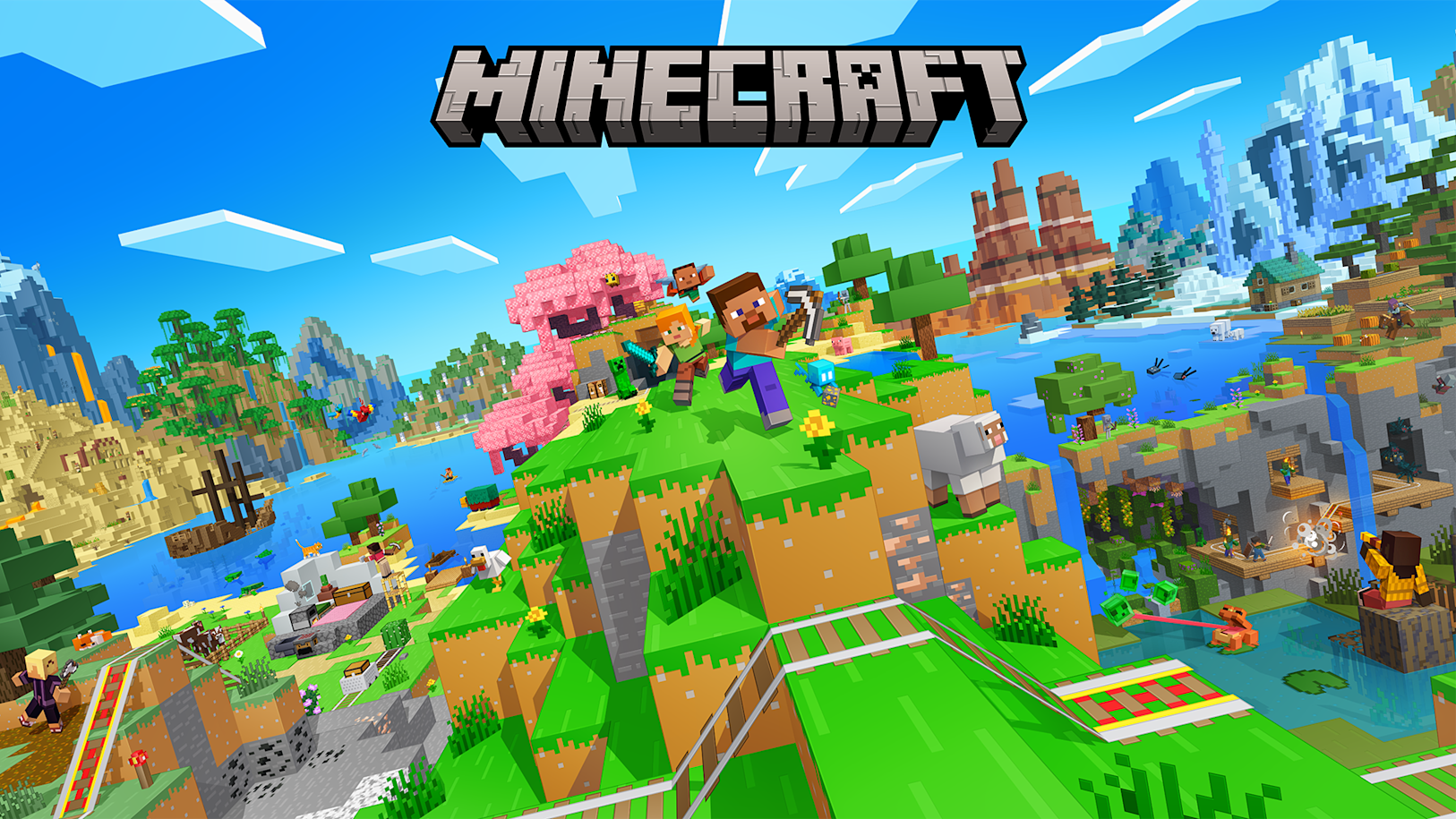
Minecraft has been around so long that it's easy to take it for granted. The decade of its existence has seen it explode from an indie project to financial juggernaut, but at the heart of all the licensing has been a game that's never stopped growing its list of features. One of the biggest parts of Minecraft's longevity has been its multiplayer options with endless servers available almost since the beginning. The reason for this is simple -- it's fun to build things with friends. Whether or not that means everyone works together on a massive project or people go off and do their own thing in a communal area doesn't matter, so long as there's something new to see. Working with a group where everyone's online, working alone or just tooling around the world sightseeing, it's all better when doing it in a shared world. The thing about Minecraft, though, is that it's become so generic it's easy to forget how entertaining it is. Over the years I've obsessed over Minecraft, walked away for extended periods of time, come back, then left again. I've explored single-player worlds and gotten involved in multiplayer servers, and the one constant is that each time I play there's something new to do. There are endless worlds stretching on forever made of giant blocks that, despite their size, are still enough to suggest the shape of almost anything you want to create, and the nice thing about Minecraft's ubiquitous nature is just about everyone is already familiar with it. Now may be the best time to dig out an old log-in and see what huge, inspiring, strange, ridiculous, epic creations you and a group of friends can come up with.
The only rules here are the game can't be a shooter (obviously) and have to be on a current gen system, or be a PC game released roughly between 2006 and 2013. That type of timeframe means a lot of great had to be cut and, to help make those decisions, I really tried to focus on games that provided a multiplayer experience you couldn't get prior to this generation. However, some exceptions do apply.
Ellegard (for me) and Gabriel begin conversing in hopes that he would regain his memory and in doing so, mentions something about Lukas' jacket, saying that he has seen others wearing it inside of the Witherstorm. With this comes Jessie's first big decision, either allowing Lukas to leave in hopes of finding his friends or make him stay to help in your fight. This is only the first of many heartrending decisions that need to be made throughout the entirety of this episode. While most of these decisions are among the toughest in any of the episodes, they help dictate how the game will end and who will be standing next to Jessie when it does. This episode lets you customize your decisions a little bit more, allowing you to decide which weapon you want to create for the final battle, which armor you would like to wear, and even in what manner you will enter the Witherstorm. It isn't much, but that's far more customization than most Telltale games allow. While it is important to be careful with your decisions, it's more important to learn who your real allies are and dictate how you want your destiny to unfold in your fight towards saving this blocky humanity.
When there's a lot of stress or anxiety in the world, it's nice to take a step back and relax. Animal Crossing is a game that does this well while alone or even better when hanging out with friends. It's hard to find a title where doing next to nothing can feel rewarding, but in Animal Crossing just running around with friends feels like a fun time. There's a sense of companionship when sharing items or fruit and rivalry when catching bugs or fish. The core of Animal Crossing's entire identity is community, sharing interests and differences. New Horizons has players starting from nearly nothing and building their own world along the way. Eventually players can show off their hard work with a fully decorated house or a fantastic visit to the museum. Even just sitting down to take a picture together with silly expressions gives that relief that it's alright to take a break without thinking too hard now and then. Not even a wasp sting can hurt long when a friend is there to give some medicine or at least laugh over how ridiculous it was.
In early access, Dyson Sphere Program is a strategy factory sim that has been generally well received by the Steam populace. Players are put in charge of crafting an energy source that can fuel humanity's existence , which is largely confined to virtual reality. The process involves carrying out research, acquiring resources, and gradually expanding productivity, an endeavor that typically requires heading to other plan
Minecraft guide creator Markus "Notch" Perrson, and other representatives from studio Mojang, have addressed the absence of a Wii U version of Minecraft on several occasions. The most recent of which came from Notch himself who said that Mojang simply doesn't have the free time to be working on a Wii U version at this moment. Though he does acknowledge that version of the game would "make sense."
I love Nintendo, but its tough to watch something or someone you love go through such a rough time and seemingly stop bothering to even try anymore. Eventually that sympathy is going to turn into anger, and for many that's exactly what is happening.
Witches aren't exactly the most imposing enemies in Minecraft . After all, they simply look like a Villager dressed in "spooky attire." One might mistake them for a Villager celebrating Halloween, but ignoring their presence is a mistake. Witches have a nasty poison that lasts for an agonizingly long 45 seconds for any player that's hit by their toxic concoct
Zombies are one of the most basic yet alarming mobs in Minecraft . They endlessly stalk the player at night, standing at doorways and groaning in a low and unnerving tone until the light of the Sun fills the sky and burns them to a crisp. Husks are just like their undead counterparts but have a unique "superpower" that allows them to stand up to the sun, and they won't catch on fire and disappear like their breth
The Bogged looks straight out of a swamp monster movie and is more dangerous than the skeleton as it will shoot the player with poison arrows. The swamp is not the only place that gamers will find the Bogged, as they will also spawn as an enemy in the new Trial Chambers , a combat system in which players must defeat mobs in order to progress and be rewarded. Skeletons are terrifying enough, but this Bogged version takes it to another le
Still, it is the girl that Nintendo has brought to the dance. As such, it's highly unlikely they will be replacing it with an entirely new console anytime soon. After all, they're not a company on the verge of bankruptcy whose entire future relies on the Wii U becoming the dominant selling system. Not to mention that the 3DS is actually doing quite well, giving them a hardware buoy should they need it.
While fairly simplistic and crude mechanically, this romp does just enough to get players hooked. The core game is somewhat short at five or six hours, but Minecraft Dungeons keeps players coming back with a cool magic system, rewarding progression, and vast dungeons crawling with foes. It doesn't hurt that the sprawling DLC packs and tough Apocalypse mode add even more to the
Giving life to a game that is notorious for not having any real plot or development within the story, Telltale did an incredible job capturing the world of Minecraft . They gave insight into the inhabitants of whatever world Minecraft takes place in and what they do when they aren't building or crafting. Inhabitants don't go around killing every zombie and spider in sight and in fact aren't actually set on mining for the greatest minerals to build the biggest buildings and the greatest weapons, which makes sense. With the decision-based mechanics of the episode, you give Jesse the opportunity to make his,(or her) own decisions that will essentially shape his personality as well as the way that others perceive him. Though a good majority of the decisions only result in "She/He will remember that," some are detrimental decisions that can make or break your situation. Regardless of how you play the episode, it offers a lot more than just being a TV show that you play and allows players the chance to create the story that they couldn't play before. For being only the first episode in this five episode series, the series gets off to an incredible start.
The story also deserves notice. Minecraft itself might not have as intense of a story, but Telltale was able to grab some of the more important factors of Minecraft and create a lore to follow and better understand what the characters with. Previously, your goal was to mine for enough materials and minerals to make a portal to the End to slay the Ender Dragon. Now, that story doesn't necessarily apply to everyone, because the ones who slayed the Ender Dragon were the members of the Order of the Stone. The members are essentially the people that you would have normally gone to the End with to help you fight the dragon, so it almost makes it seem like you were some kind of legendary hero for being able to do that if you were able to do so in the past. Everyone else in the episode doesn't have that same goal and, funny enough, don't look at all like the villagers that you sometimes wander upon in the original game. The storytelling and characters leave you with enough of an impression that leaves you waiting in anticipation for the next episode. You begin to make connections with your friends and build a relationship with them in the span of one single episode so it leaves you wanting to know what will come next for this party of builders.
Having been introduced to the world of Dragon Quest when Nintendo Power included the NES copy of Dragon Warrior with a subscription, it should surprise no one that one of the upcoming games I am anticipating is Dragon Quest Builders. Taking gameplay elements from Minecraft News and mixing them with story driven adventure led to the creation of a unique experience within the world of Dragon Quest. After spending some time playing the demo, I sat down with producer Noriyoshi Fujimoto to discuss the upcoming game. In addition to learning about Dragon Quest Builders, I also learned that Mr. Fujimoto and I share a common love of inflicting unspeakable horrors unto The Sims.
The action from the first episode hasn't left at all and if anything, managed to speed itself enough where you practically have to do a second playthrough just to catch it again. There are plenty of moments that could have been explained more and it's upsetting that they weren't in the short time it took to finish the episode. Things like Olivia's disappointment in finally meeting her hero and Lukas' role in Jessie's group of friends could have been touched upon a little bit more but the fact that they weren't makes me fear for future episodes. It leaves you with a, "oh, that was it?" feeling that should never be felt while playing any game, especially right when you begin getting into the action and quickness of it all. Hopefully, the third episode will capitalize on a few more important moments within the main character’s development and slow down a little in order to give everyone the attention that they deserve.
(thinks for a few seconds) If I suck at sandbox and building games, would I still be able to play this? Like traditional Dragon Quest games, anyone can pick up and play this. Dragon Quest Builders includes blue prints that will instruct the player on how to build certain structures. You are of course free to deviate from them as much as you want but for people who want to quickly build a structure we included them to facilitate faster gameplay and progress if someone wants to use them. (Here I am shown some screenshots from a phone that include a ridiculously huge and impressive kingdom, the amusement park, a giant gold slime, and even a replica of a screen shot of the battle with Gilgamesh from Final Fantasy V) All of these are screenshots from Dragon Quest builders. If you can imagine it, you can build it. There are some people in Japan who have spent excess of fifty days constructing magnificent kingdoms strictly from their own imagination. Even people who are not fans of traditional Dragon Quest games can enjoy this so I hope a lot of people give it a shot when it comes out next month.
Si sois ustedes nuevo en el terreno de las máquinas casinos online con tiradas gratis, seguramente te preguntás cuál es la diferencia entre las tradicionales y las de última generación.
Las máquinas de toda la vida en su versión típica tienen 3 columnas y limitadas líneas de pago — usualmente entre 1 y 5. Los símbolos son los icónicos: frutas, BAR, sietes, campanas, herraduras. La jugabilidad es sencilla: girás los rodillos y esperás que coincidan los símbolos en una línea.
La virtud de las tradicionales es justamente esa pureza. Ninguna distracciones. Apretás "spin" y en segundos ves si ganaste o perdiste. Apropiadas para partidas express.
Las slots de video transformaron todo. En estos tiempos podés encontrar títulos casinos con paysafecard configuraciones complejas, cientos de formas de ganar, y mecánicas complejas como cluster pays, megaways, y multiplicadores progresivos.
Algo a destacar merecen las Megaways. Desarrolladas por Big Time Gaming, ofrecen hasta 117,649 formas de ganar en cada giro, ya que el cantidad de símbolos por rodillo varía de manera random.
Una novedad de las modernas son los tiradas extra. Estos modos son capaces de multiplicar las ganancias por 10, 100 o incluso 1000 veces. Sweet Bonanza, Sugar Rush, Gates of Olympus son exponentes claros de esta escuela de tragamonedas.
¿Cuál es mejor? Va en gustos. Las clásicas son óptimas para partidas cortas y para entender la dinámica del juego. Las nuevas ofrecen más diversión con gráficos, bonus rounds, casinos con PayPal y potencial de payouts importantes.
Lo que yo haría si recién arrancás: jugá todas las variantes en modo demo, sin invertir un peso. Una vez que comprendés qué te atrapa, ahí sí pasás a dinero real con criterio.
151owners decided to go big for their build, which they named after the very persistence that helped them through finishing this project. Although these detailed, absolutely massive, and epic builds take weeks, sometimes even months to finish, the results are always worth
Witches show up in the strangest of places, too, with some of them popping up in caves. Players can recognize them in the darkness thanks to their cackle, but those who are unprepared to fight against a Witch will soon find themselves respawning at their b
ColtusBoltus chose to go at this challenging build alone, constructing this beautiful life-like town. No doubt getting the layout and building designs right took them a lot of time and careful planning to pull
Ellegard (for me) and Gabriel begin conversing in hopes that he would regain his memory and in doing so, mentions something about Lukas' jacket, saying that he has seen others wearing it inside of the Witherstorm. With this comes Jessie's first big decision, either allowing Lukas to leave in hopes of finding his friends or make him stay to help in your fight. This is only the first of many heartrending decisions that need to be made throughout the entirety of this episode. While most of these decisions are among the toughest in any of the episodes, they help dictate how the game will end and who will be standing next to Jessie when it does. This episode lets you customize your decisions a little bit more, allowing you to decide which weapon you want to create for the final battle, which armor you would like to wear, and even in what manner you will enter the Witherstorm. It isn't much, but that's far more customization than most Telltale games allow. While it is important to be careful with your decisions, it's more important to learn who your real allies are and dictate how you want your destiny to unfold in your fight towards saving this blocky humanity.
Another issue that impacted the episode as a whole were the amount of times that the members of the Order backtracked into flashbacks that told of the argument that disbanded them. While I understand that it's crucial to the story, it took away completely from the decision making and the story that revolves around Jessie and the Wither Storm. The characters, minus a scene with Petra, receive almost no depth and leave it to the environments and the little bit of dialogue to develop them. With the environments being the main reason to play the episode, the lack of exploration doesn't help its case. For a game that is meant to develop according to character choices, there didn't seem to be a whole lot of decision-making going to develop the minecraft story guide further. Hopefully, the cliffhanger ending will pose as an entryway to further Jessie and his friend's role in all of this instead of being focused on the Order.
The story development in this episode brings out its appeal to older audiences. It's fast paced and doesn't leave a whole lot of room to think where it would be important to. Quick time events (QTEs) are important in the episode, as they have been in the previous three, making it known that you have to be ready for anything. When you aren't interacting in a QTE, you are trying to solve a series of puzzles that can only be done so by following a set of clues. The previous episodes also had puzzles the solve but they were as easy as flipping a few switches and moving on. This episode stresses your ability to listen in order to solve the puzzles and makes it a little easier to screw up and start over again. The episode also follows in the footsteps of the previous as exploration continues to be an important aspect. Since these puzzles are a little bit more difficult, every room has more information and lore about the world that Telltale has created as you search for clues.
Ideally it's the optimal situation for consumers. You buy a system, and you have access to almost every major game, with as few exceptions as possible. To me though, it's a sad thought, as I sometimes long for a time when there were an assortment of games I couldn't play because I could only afford one system. When that one guy in the neighborhood who bought the Xbox would show us all "Halo" and have us regret our PS2 decision (if only for a moment), or when N64 owners could stretch arguments with their Playstation rivals on into the morning by just dropping the name "Goldeneye" every now and then.
While that could serve as the intro to any number of creepy fan fiction tales, my thoughts were much more earnest, yet still slightly troubling. Specifically, they were about how the blue hedgehog and vertically gifted plumber were real oddballs as far as company mascots go, in that they weren't really dreamed up by a PR team or advertising firm, but rather by the products themselves.
 Each path differs in gameplay as Magnus’s path is a lot more action-oriented with the introduction of Boom Town and 'griefers.' Of course, we all know 'griefers' from the original game as annoying players who would blow stuff up. Because of this, QTEs (Quick Time Events) are utilized that were so popular in the previous episode to dodge TNT. Ellegaard’s path isn’t as action oriented and focuses more on puzzles and the character focus from the very first episode. There is a lot more dialogue in this path and a lot of it makes up the funnier aspects of this episode. This episode capitalizes on the voice actors that Telltale has gotten together like Corey Feldman (Magnus), who played Mouth in The Goonies, and Grey Griffin (Ellegaard), famous for playing Daphne Blake in the Scooby-Doo cartoon movies that bring the characters to life.
Finally, the construction element is there. Minecraft News ’s blocky aesthetic has constantly been compared to that of LEGO’s, and really that’s true. In fact, it’s likely that it was intended to be that way. As kids, many of us were fascinated with LEGO’s. Building castles and cars using fundamentally simple components was appealing. Even better, it breathed experimentation. It encouraged trying something new. It fed that feeling of individual creative freedom by allowing us to build something that we wanted. That idea is omnipresent in Minecraft ; it’s the crux of the construction element in the game. Simple cubes of dirt, rock or sand can be used to build everything from houses to skyscrapers to sculptures. With a little hard work, you can make your "castle of dreams." The Creative Mode, with its free movement and ample resources, is the pinnacle of this mentality; you can create what you want. And gamers have. There are hundreds of Minecraft videos online of people building enormous, monolithic structures with the game’s basic building pieces. Minecraft has proven that this idea can be made into something massive; gamers are guaranteed to create something when given the tools to do so.
Medieval and traditional building styles will often reign supreme in Minecraft , due to the game's natural style. The wood and stone textures inspire players to go for these traditional, almost gothic-style builds, as seen in this grandiose cas
And understanding what initially draws a person into video games is all the more difficult today. With three major consoles on the market and an avalanche of games to play, newcomers to the gaming world have ample opportunity and choice to select from. Fans of sports games are able to experience the fun of managing their favorite player rosters with Madden . Fans of Dungeon and Dragons or other tabletop games are able to get a faster-paced and more cinematic version of role-playing with The Elder Scrolls . Alternatively designed games like Minecraft , Journey and The Stanley Parable are becoming interesting to scholars who find fascination in experiencing a story from an unorthodox viewpoint. There are so many different styles and genres to choose from that, now more than ever, finding out why anyone gets into games is a question with too many answers to list.
The expansive nature of Minecraft ’s world is also what contributes to this fully realized sandbox vision. The worlds are virtually infinite (on PC) and provide ample opportunity to adapt and explore multiple biomes and topography. There’s no real reason to go to one area over the other, but players are frequently compelled to do so. It’s an embrace of wanderlust, one that has influenced many other games like the upcoming No Man’s Sky . You have no objective beyond the horizon and there might be seriously dangerous monsters out there. You might not be well-equipped or even supposed to go there at the current equipped state. But you keep going, just to see. Just to explore.
During the early 90’s, many of us were involved in, as coined by James Rolfe, the "bit wars," the point where competing systems developed a brand loyalty with the consumers. It was a Genesis/SNES world and the market intended for you to pick a side. But those of us who were first exposed to video games during this time didn’t originally intend to side with either Sega or Nintendo. While there were certain characteristics of each console that we preferred, our focus was never on what games were better. The first big step for any future gamer is one devoid of partisanship in the gaming community; when you first enter the gaming world, you aren’t involved in the console wars. In fact, they did not exist to you back then. I personally chose Sonic the Hedgehog as my "gateway game" simply because I liked who he was as a character. I liked his cool blue color, his tough-guy stare, and the acrobatic nature of how he moved. Level design, physics, replay value, music, even the buzz term "blast processing" meant absolutely nothing to me. It was Sonic himself that captivated me to join the gaming world.
What do I mean by that? In game development terms, a "vertical slice," is a gameplay segment of finished or near-finished quality that showcases all the planned features of a game to potential investors. At the start of a project, these are a massive sink for time and effort, since they essentially involve doing all the hard parts of finishing a game to complete one 10-minute section. Generally, they’re seen as a bad practice. However, toward the end of development, it’s a lot easier to pull assets together for a vertical slice. Of course, if you’re shopping your game around to publishers at that stage, you’re probably in a lot of trouble, but a standalone "vertical slice" can also serve as a strong alternative to a traditional demo.
Rather than going for an evil wizard's castle, however, why not instead create a lava blade house, which looks like a sword stuck into the ground? That's the path AtrixStd went for in their build, which also has a tutorial available on their YouTube chan
Many other gamers in my age group were hooked during the Super Nintendo/Sega Genesis era, while the older crowd are likely to have the original NES in their hearts. Some might even cite the original Atari 2600 as their first step into the world of gaming, with their reverence for the medium enduring even the colossal gaming crash of the 1980’s. On the other side of things, we have younger gamers who are being raised on Playstation consoles as new as the Playstation 4 and even Microsoft’s Xbox line, which didn’t appear until the new millennium. We also mustn’t forget those of us who played PC games during our childhood, even the consistently ridiculed edutainment games like Oregon Trail II . We’re all given so much history and so many options to choose from as fans within this medium, but those of us who call ourselves gamers find something truly fascinating with games as a whole.
The expansive nature of Minecraft ’s world is also what contributes to this fully realized sandbox vision. The worlds are virtually infinite (on PC) and provide ample opportunity to adapt and explore multiple biomes and topography. There’s no real reason to go to one area over the other, but players are frequently compelled to do so. It’s an embrace of wanderlust, one that has influenced many other games like the upcoming No Man’s Sky . You have no objective beyond the horizon and there might be seriously dangerous monsters out there. You might not be well-equipped or even supposed to go there at the current equipped state. But you keep going, just to see. Just to explore.
It’s safe to say that Minecraft Dlc has become one of biggest gaming phenomenons ever, earning mass cultural significance and merchandising opportunities, all while solidifying Persson’s creative mastery and contributing to the indie game boom of the 2010s, but Minecraft has taught many gamers and developers alike that there are ways to approach game design from other angles and still provide a fulfilling experience. When it comes right down to it, gaming hasn’t had the kind of creative milestone Minecraft has shown in a long time. It uses the gaming medium in groundbreaking ways that no other medium can use; it is a work of art in every sense of the matter.
We've stumbled into some uncertain times, dear readers. I can't say I've ever experienced anything as intense as the Social Distancing Era. As we watch doctors of all kinds on the news recommend that we stay home as much as possible, we're faced with new challenges to overcome. Those of us who self-isolate may find this to be a troubling time -- especially if it affects our income, work, childcare or health. Yet "social distancing" doesn't have to mean completely cutting yourselves off from your support network! Path of Exile is a beautifully robust ARPG that will help bridge the gap. It's like if Developer Grinding Gear Games basically wanted Diablo 2 back, so they created their own Grecian-inspired version. It's all there: awesome loot, a unique ability-gem loadout system, a massive skill tree that allows you to create inspired builds. It features online co-op so you and your buddies can play through the story together. The best part is that it's free-to-play, so it's an ease on both your mind and your wallet during these trying times. Path of Exile can be found on Xbox One, PS4 and PC which means a wide audience will be able to enjoy playing.
The other type of item is accessory and each one grants a different skill. The feather, for example, does a quick roll that stuns an enemy, while the soul cube lets out a powerful arcane jet of energy blasting through everything in its path. A bundle of wheat summons an attack-llama, there are healing pendants, berzerk mushrooms, magic shields and plenty more to turn up. These let you create a personalized loadout of three skills, defining character class by what you choose to carry. The more powerful accessories are powered by souls, which are released and automatically gathered as you take out monsters, but it doesn't take many to fill the bar. The skills are there to be used rather than hoarded.
While fairly simplistic and crude mechanically, this romp does just enough to get players hooked. The core game is somewhat short at five or six hours, but Minecraft Dungeons keeps players coming back with a cool magic system, rewarding progression, and vast dungeons crawling with foes. It doesn't hurt that the sprawling DLC packs and tough Apocalypse mode add even more to the
And understanding what initially draws a person into video games is all the more difficult today. With three major consoles on the market and an avalanche of games to play, newcomers to the gaming world have ample opportunity and choice to select from. Fans of sports games are able to experience the fun of managing their favorite player rosters with Madden . Fans of Dungeon and Dragons or other tabletop games are able to get a faster-paced and more cinematic version of role-playing with The Elder Scrolls . Alternatively designed games like Minecraft , Journey and The Stanley Parable are becoming interesting to scholars who find fascination in experiencing a story from an unorthodox viewpoint. There are so many different styles and genres to choose from that, now more than ever, finding out why anyone gets into games is a question with too many answers to list.
Despite all of that, under the proper circumstances, this is still a genre that's very easy to pick up and play, which is perhaps the most important part as it ensures that years and years of gamers to come will find themselves drawn to this intriguing blend of strategy, skill, and luck, just as centuries of people have found themselves drawn to a game of chess.
From everything that we've seen and heard so far, it looks like gaming companies are doing just the same, as an arms race to acquire as many indie games as possible is about to get very heated. Just like there is still some studio executive who is kicking himself for missing out on The Blair Witch Project's profits, no gaming company wants to be the one who turned down the chance to have the next Minecraft solely on their system. Perhaps more than ever, the power in games belongs to the individual artists.
If you followed Gamescon this year, you'll have no doubt noticed that the word on the lips of every Microsoft,Sony, and Nintendo representative was "indie." Whether it be Sony revealing that Minecraft, Rogue Legacy, and The Binding of Issac would be part of the PS4 family, linked website Microsoft unveiling a pretty daring new system to encourage indie development, or Nintendo showing that indie developers are fully prepared to make use of the unique capabilities of the Wii U, it became clear that both companies have suddenly realized that indies are no longer a niche market ran by eccentrics and snatched by the gaming version of hipsters, but a viable and exciting source of incredible new ideas, and creative final products.
They're unwilling to go out of their way to adapt major third party releases. They are painfully slow to adopt an indie market that could actually make good use of the Wii U's unique capabilities. They seem, at times, to be woefully oblivious to the current state of the game industry, and determined to turn the Wii U into a time machine that will make it 1987 again. They seemingly have a hero complex that drives them to be the only ones who make a game that turns it all around.
It wasn't meant to last though, as even though the 32/64 bit era only barely blurred the party lines, with every subsequent gaming generation, it became harder and harder to separate one system from another just by looking at the games on the store shelves. By the time that Peter Moore revealed a "GTA IV" tattoo on his arm at E3, the message was clear that Triple A titles had become too big and too expensive to only commit to one system or another and, outside of some in-house and privately published development teams, the idea of big name exclusives was a dying light in the night drowned out by the dawn of a new day.
Ideally it's the optimal situation for consumers. You buy a system, and you have access to almost every major game, with as few exceptions as possible. To me though, it's a sad thought, as I sometimes long for a time when there were an assortment of games I couldn't play because I could only afford one system. When that one guy in the neighborhood who bought the Xbox would show us all "Halo" and have us regret our PS2 decision (if only for a moment), or when N64 owners could stretch arguments with their Playstation rivals on into the morning by just dropping the name "Goldeneye" every now and then.
Chivalry is a medieval combat game that, for the most part, perfectly recreates the experiences of playing with and against your friends in a Braveheart style battle. Like Monaco did with the heist genre, Chivalry showed us that those years of wishing to participate in large scale medieval battles in video game form were not unfounded, as there is a visceral pleasure that comes with charging the field of battle with a large axe and watching limbs fly around you like leaves in the Fall. The enhanced focus on face to face combat drastically alters deathmatch dynamics, and forces you to create strategies applicable in few other games.
The action from the first episode hasn't left at all and if anything, managed to speed itself enough where you practically have to do a second playthrough just to catch it again. There are plenty of moments that could have been explained more and it's upsetting that they weren't in the short time it took to finish the episode. Things like Olivia's disappointment in finally meeting her hero and Lukas' role in Jessie's group of friends could have been touched upon a little bit more but the fact that they weren't makes me fear for future episodes. It leaves you with a, "oh, that was it?" feeling that should never be felt while playing any game, especially right when you begin getting into the action and quickness of it all. Hopefully, the third episode will capitalize on a few more important moments within the main character’s development and slow down a little in order to give everyone the attention that they deserve.